I asked Plural to democratise itself
I filed an initiative on plural.ch demanding that its operator adopt a legal form with member control. Status: under review.

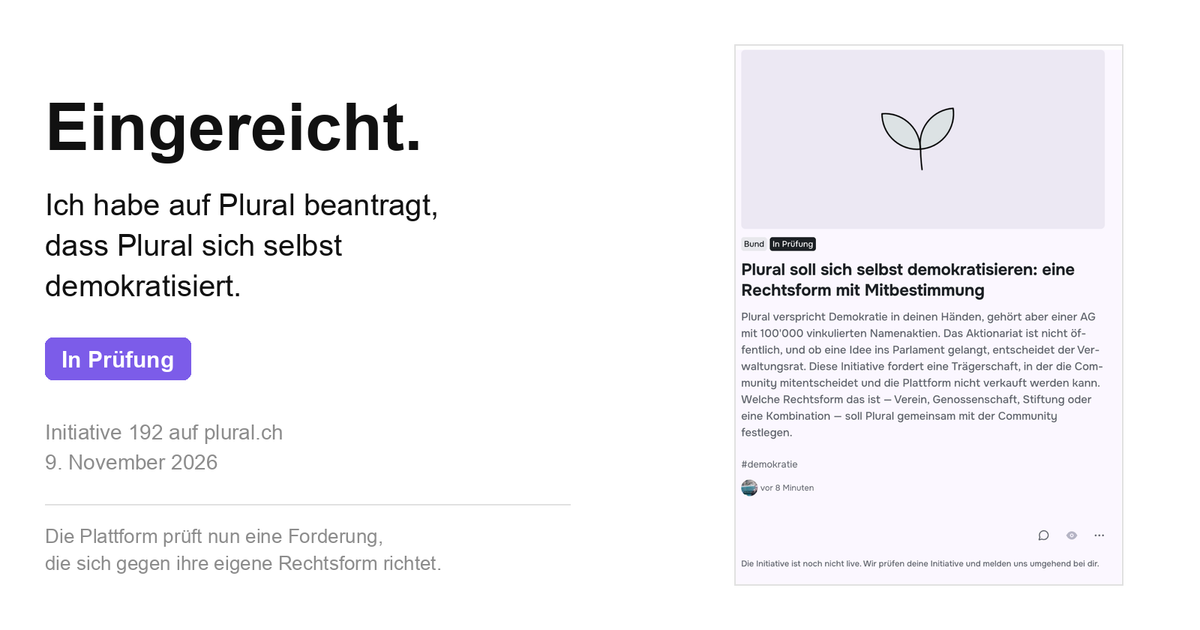
A platform promises democracy. The only way to test a promise like that is to use the platform. So I filed an initiative on plural.ch demanding that its operator give itself a legal form with member control.
Testing the promise runs through their own form
You cannot start a petition on Plural; there is no button for it. The only route outwards runs through an initiative: you file one, and if the operator takes it up, it becomes a submission to parliament.
That is also the only part of the platform where anything is happening. Under «Referenden» and «Gesetze», Plural mirrors the federal legislative calendar. The page names its own source and date, and the explanation underneath is, by its own note, AI-assisted. Under the law I opened: zero comments. Where people contribute ideas of their own, there are hundreds of votes and real arguments.
So I filed one. Title, summary, federal level, topic democracy. Three problem statements, five proposed solutions, three benefits and four sources, among them the operator's commercial register entry. Each field holds 280 characters, which concentrates the mind.
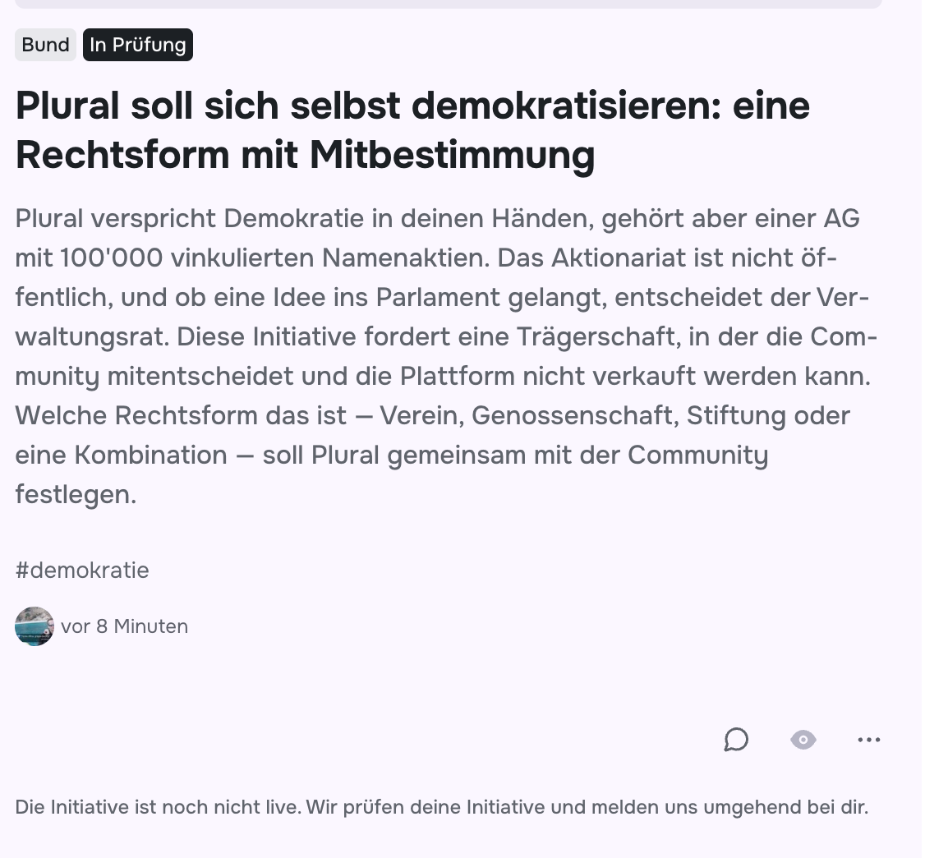
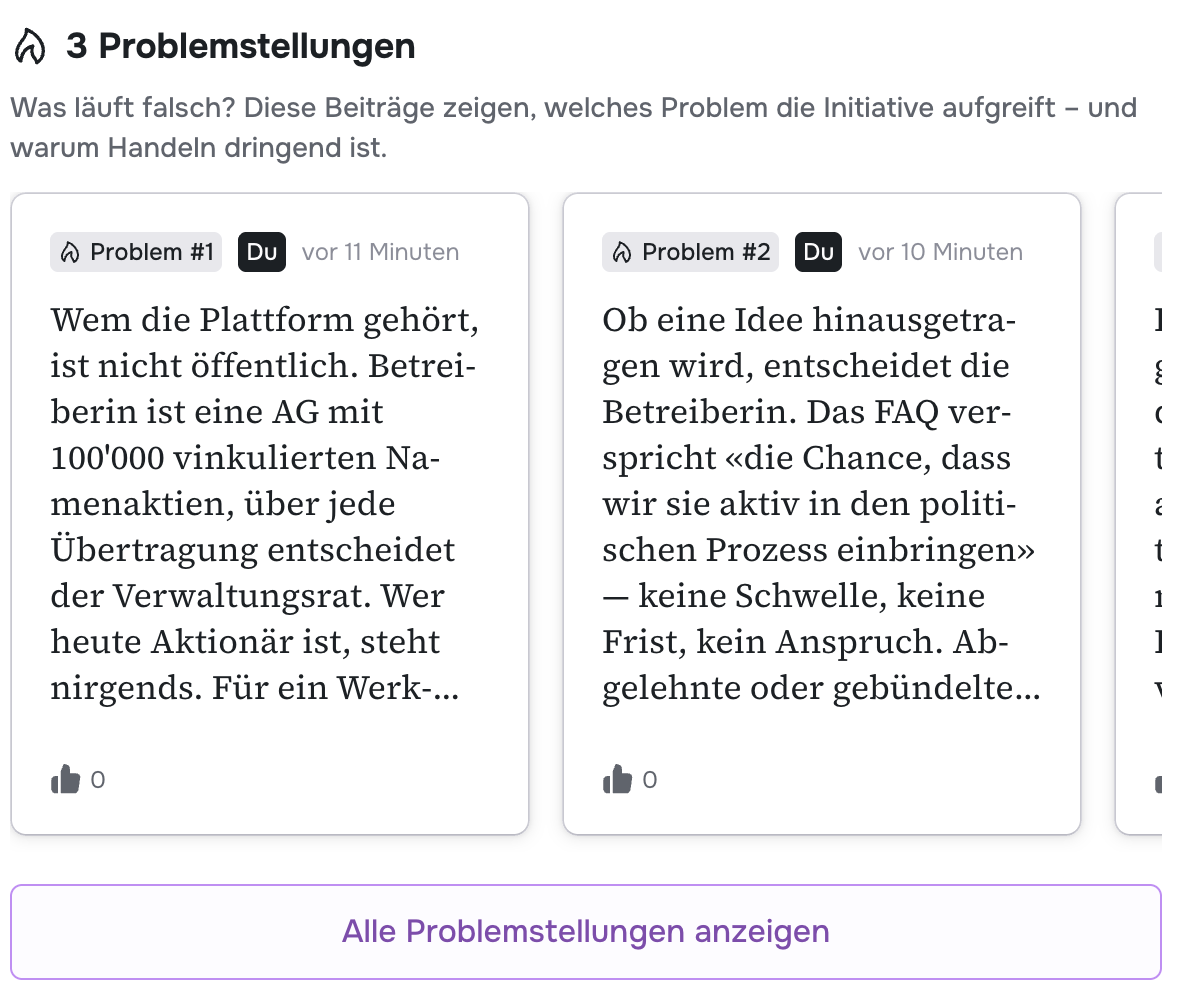
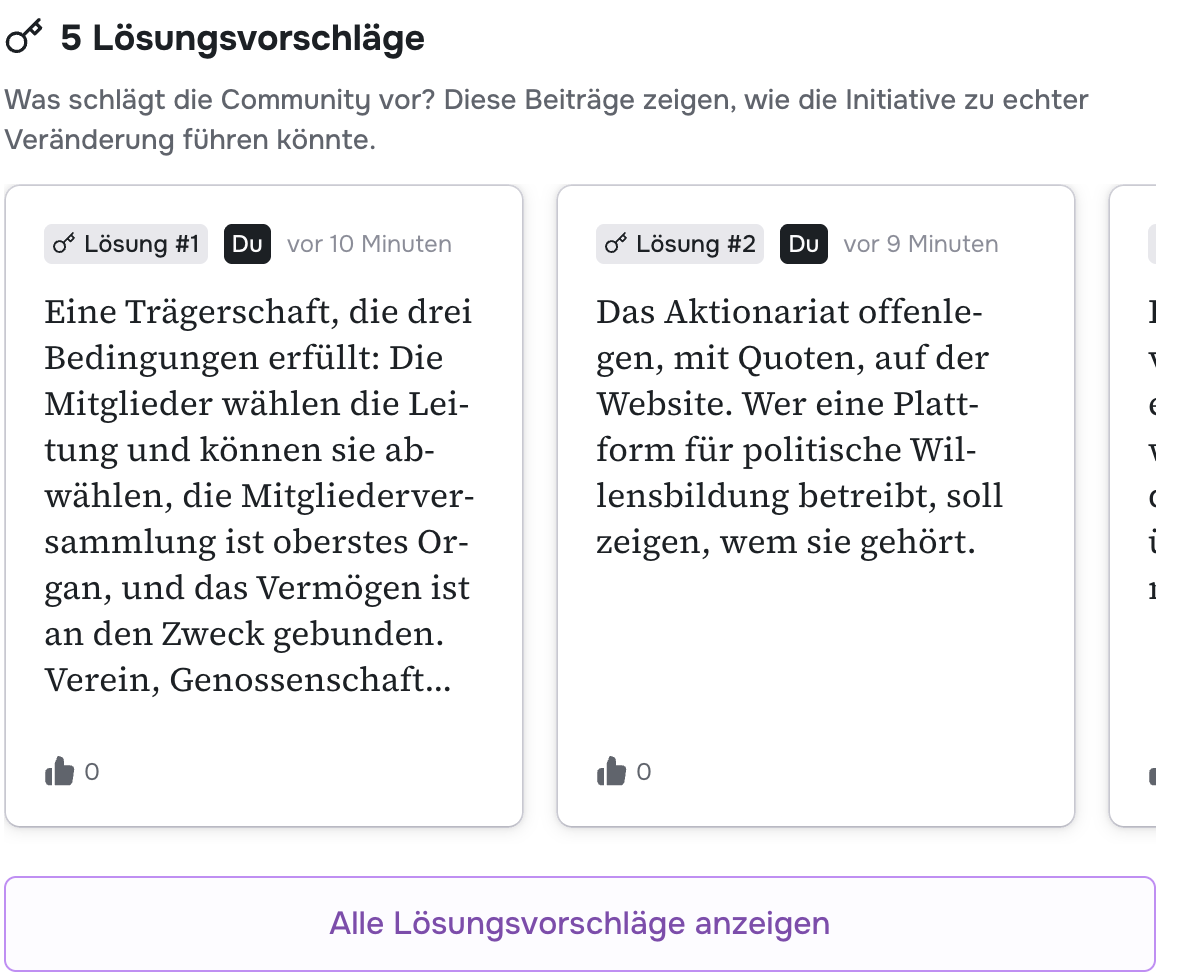
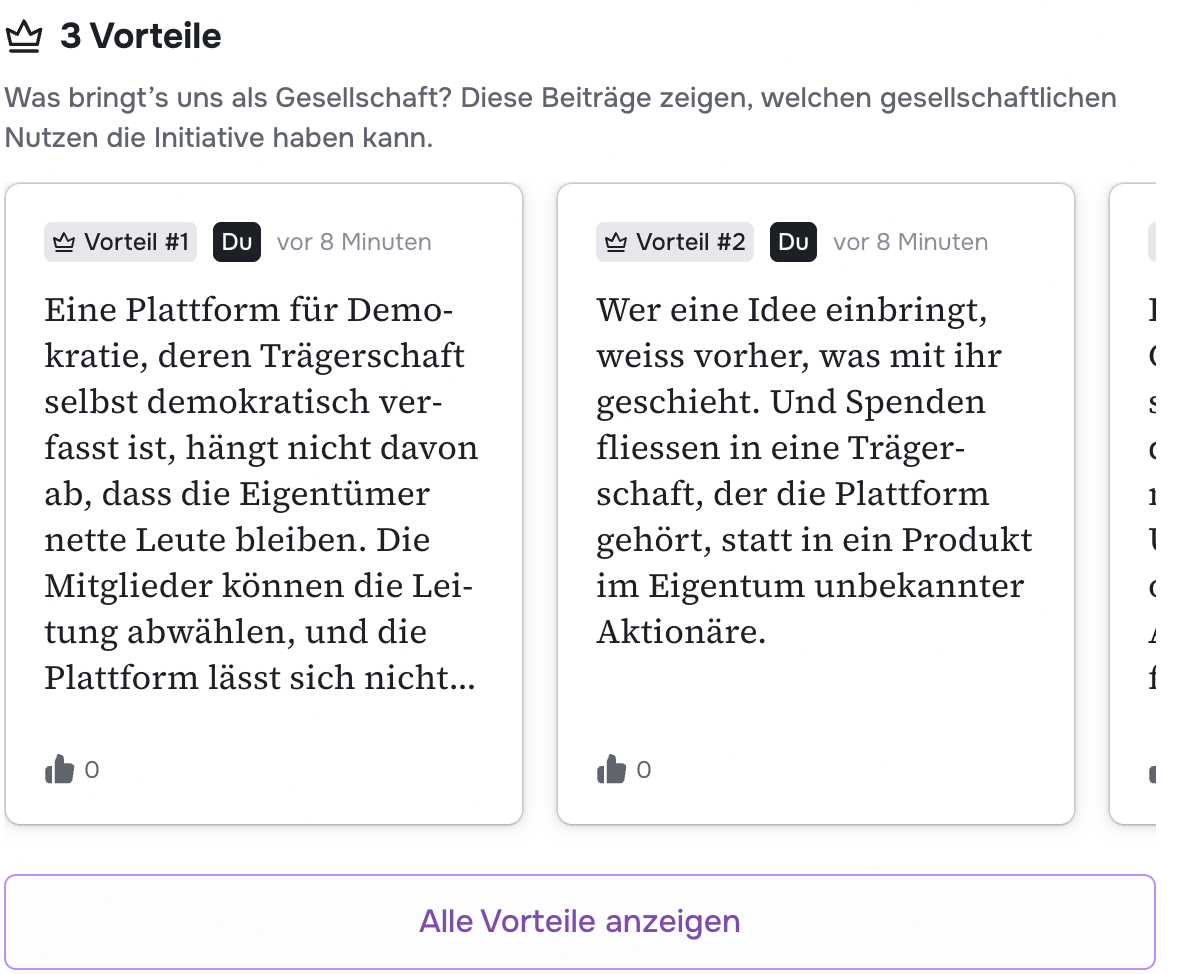
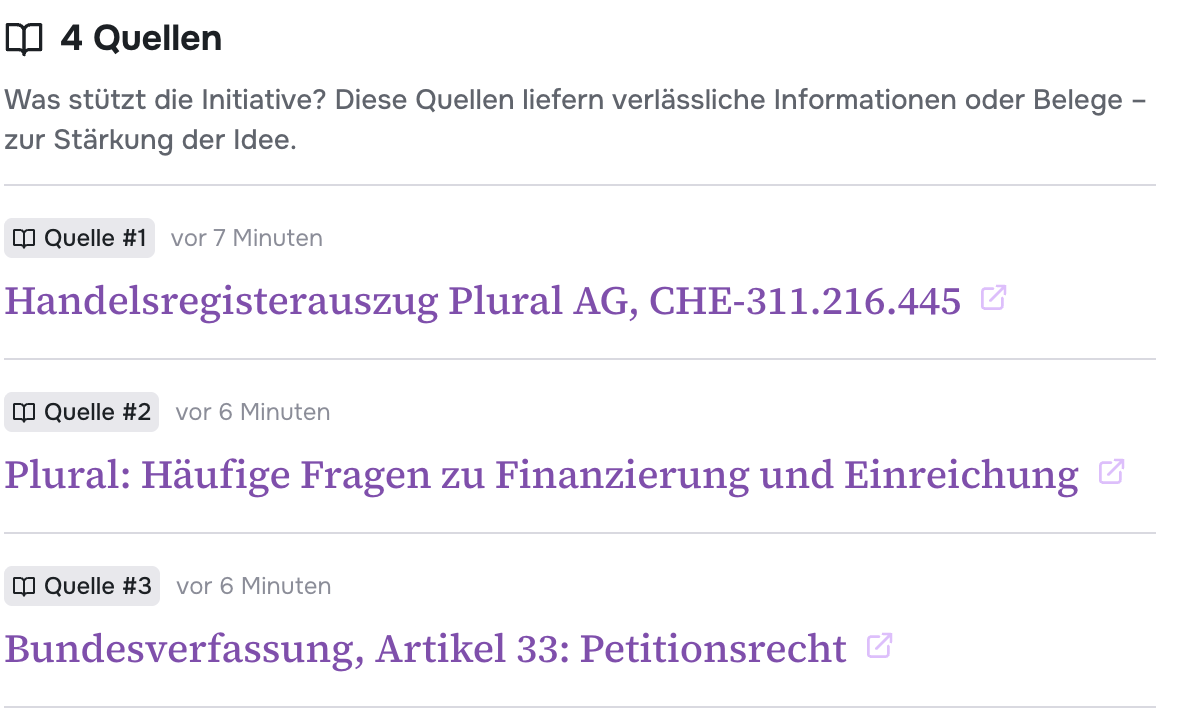
5 images — swipe or scroll to the right.
What is demanded is not one particular legal form but three conditions. Members elect the leadership and can vote it out. The members' assembly is the highest organ. The assets are tied to the purpose, and a sale of the platform is ruled out. Whether an association, a cooperative or a charitable foundation as anchor shareholder delivers that, Plural should work out with its community.
The demand rests on the register, not on an opinion
Plural.ch is run by a company limited by shares. Its capital consists of 100,000 restricted registered shares, and every transfer is decided by the board. Who holds them today is stated nowhere.
The purpose clause allows the company to acquire, pledge and sell intellectual property rights and licences of every kind. Selling is provided for. Of the transfer into community hands that the platform holds out, the register says nothing. The company has waived a statutory auditor.
That is the difference between a stance and a legal form. A stance can change when the shareholders change. A legal form cannot.
WeCollect shows that it works differently. Its own terms page states who owns the thing: a tax-exempt association and the Stiftung für direkte Demokratie, a sub-foundation of the Fondation des Fondateurs. No shareholders, no shares anyone could buy. The platform belongs to the body that carries it, and that body belongs to its purpose.
Now the company reviews a demand against itself
Since filing, the initiative carries the badge «In Prüfung» — under review. Below it stands: «The initiative is not live yet. We are reviewing your initiative and will get back to you shortly.»
Who reviews is not stated. Nor is the standard being applied. There is no deadline and no appeal. The FAQ promises «the chance that we actively bring it into the political process» — a chance, not an entitlement.
So a company limited by shares decides behind closed doors whether a demand for its own democratisation may become public. That construction is precisely what the initiative criticises.
Without this article the outcome would be invisible
Three outcomes are possible: Plural puts the initiative live, asks for changes, or turns it down. Rejected contributions appear nowhere on the platform. A no would therefore not be readable anywhere.
Hence this article and the images above. They record what was filed, when, and on which sources. What Plural makes of it can be measured against that.
I will report the decision either way. Stay tuned.
This article was produced with partial use of AI tools, including for fact checking. All content has been carefully checked, revised and is my responsibility.