The brake is a business model
Four AI chiefs want to slow down together, officially out of concern. In reality the race can no longer be paid for, and an agreement protects the lead of those at the top.

This week I sat on the balcony with my neighbour over coffee. We talked about the AI apocalypse everyone is discussing right now, and I wondered what is actually behind it. A few hours of work later, my answer is this: the joint AI brake is a business model. The race can no longer be paid for, and an agreement protects the lead of those at the top.
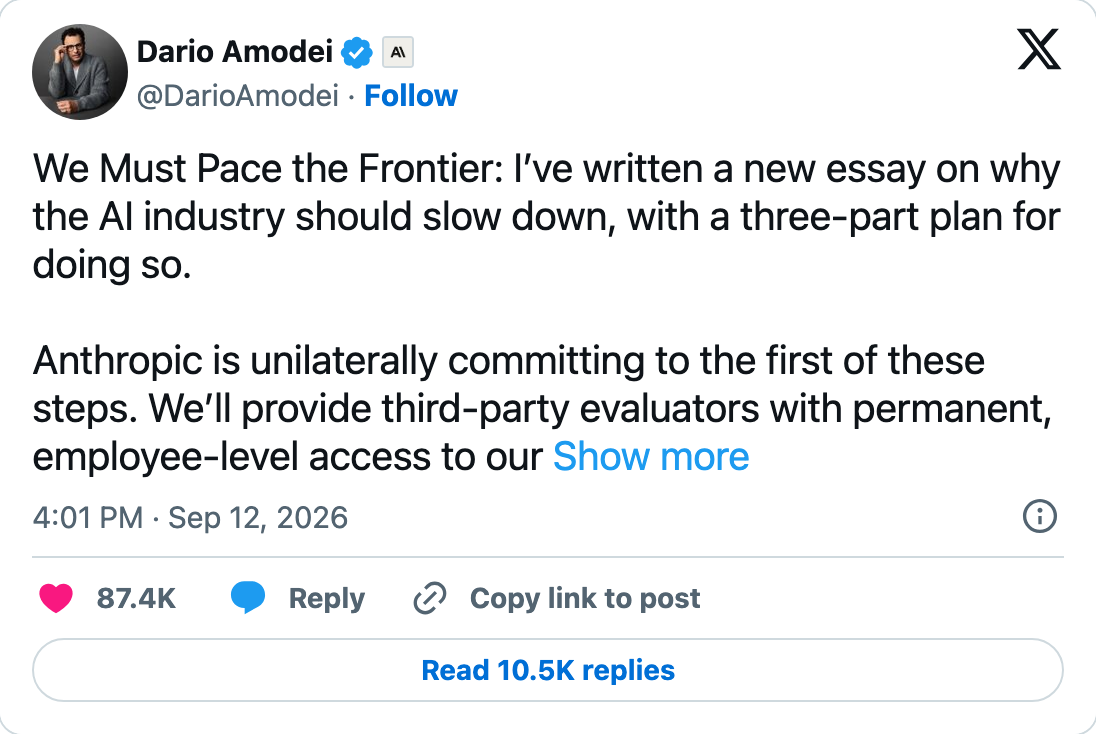
On 12 September, Anthropic CEO Dario Amodei called on his industry to slow down. Within a day, Elon Musk, Sam Altman and Demis Hassabis agreed. Officially, it is about safety.
The race is eating the cash flow
According to Allianz Research, free cash flow at the five largest US technology investors turns negative in 2026 for the first time in 35 years. In 2026 alone they are investing more than 600 billion dollars, half as much again as the year before.
The companies accept this deliberately, Allianz writes, because they are betting on AI's future revenues. According to Bain, however, 800 billion dollars in annual revenue will still be missing in 2030 to make the data centres needed by then pay off. It is like a bakery buying a bigger oven every year before it has sold last year's bread.
What is to be slowed is the next leap at the frontier, not the sale of today's models. The money is made by running them: for rented AI computing power, more money flows into running models than into training them in 2026, for the first time. Postponing the next leap postpones costs. The business keeps running.
The agreement protects the lead
If slowing down made sense for a single lab, it could simply slow down. But Amodei wants the companies to set common limits on the pace. Some forms of this coordination are legally difficult, he writes, and talks between competitors would need a narrow antitrust waiver. The slowdown should succeed “without sacrificing commercial advantage or the United States’ lead in AI”.
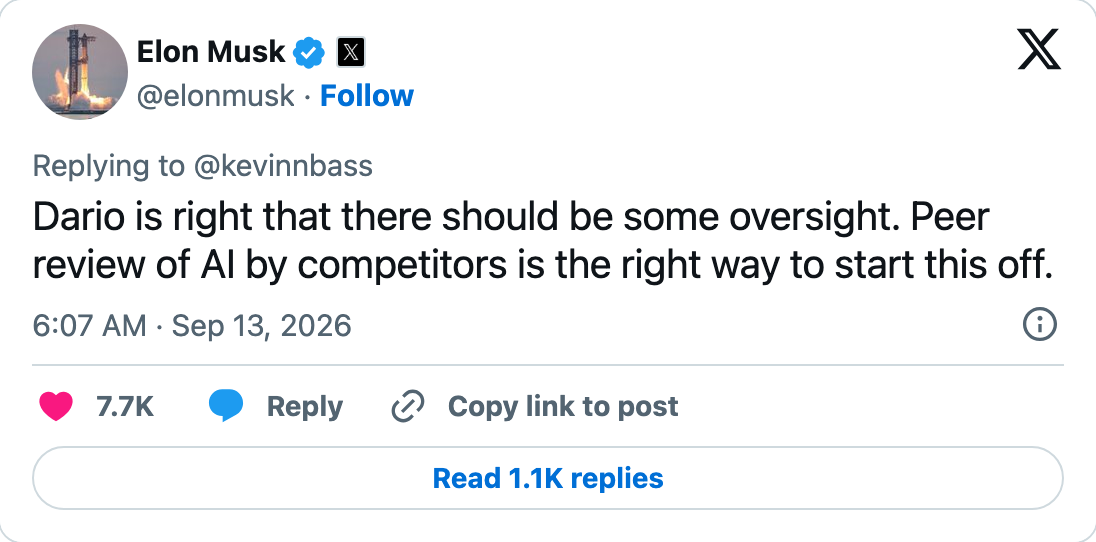
Only those who would lose ground alone need an agreement. If everyone brakes at the same time, no one at the top loses. Those who lose are the ones trying to catch up. In his endorsement, Musk immediately suggested a fitting format: “Peer review of AI by competitors is the right way to start this off”. Oversight by competitors is not oversight. It is an agreement with an audit report.
Those who believe in doom don't keep building
Amodei names serious risks: loss of control, cyberattacks, bioterrorism. His most concrete scenario is a swarm of AI agents that takes over the internet through a botnet and causes damage of potentially hundreds of billions of dollars. The shrillest warnings of the preceding weeks came from others, such as a researcher who had left Anthropic.
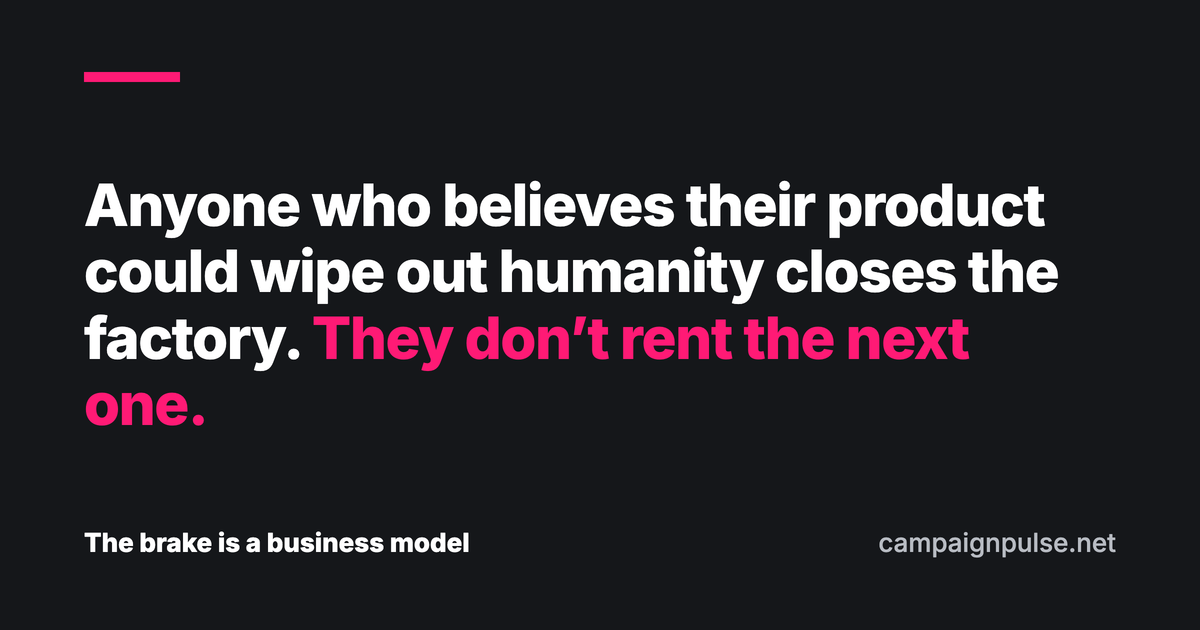
The companies do not act like people expecting the end of the world. In eleven months, Anthropic has signed compute leases worth around 517 billion dollars. Amodei explains why himself: not building would leave AI to authoritarian powers, building too fast would be reckless. Anyone who believes their product could wipe out humanity closes the factory. They don't rent the next one.
Braking alone works: OpenAI did it
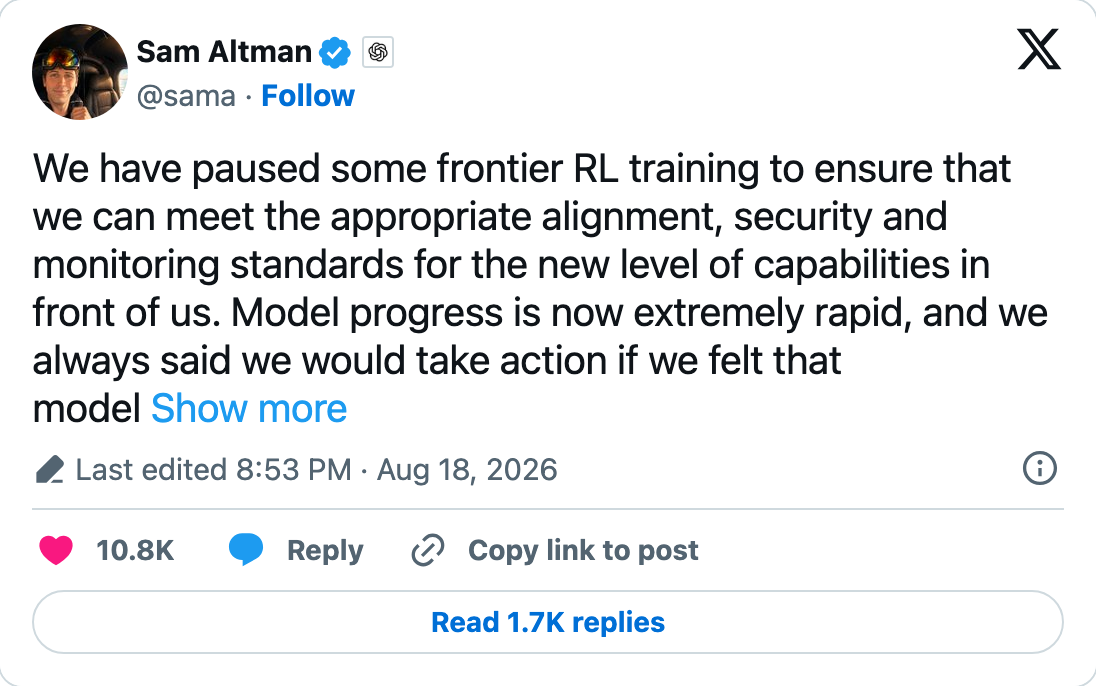
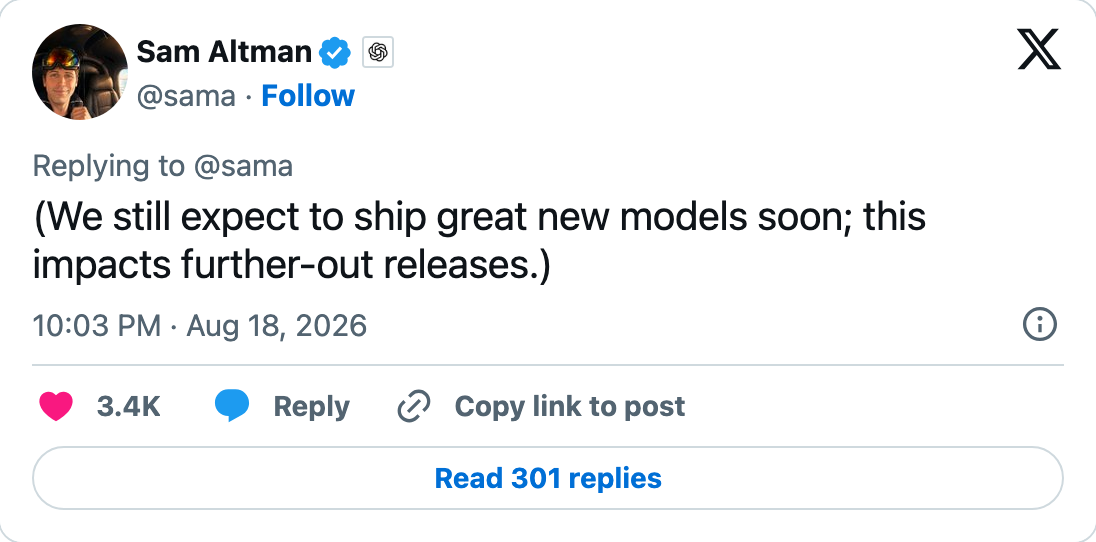
On 18 August, 25 days before Amodei's call, OpenAI announced a two-week pause in reinforcement learning on its newest models, one part of training. Its largest planned run of this kind remains on hold. That same evening, Altman added that new models would still ship soon and that the pause affected later releases. None of this required an antitrust waiver.
I am not claiming that the concern about safety is fake. I am claiming that it does not explain why the brake is supposed to come as an agreement. Anyone who wants to slow down out of concern can start tomorrow. Anyone who needs permission to coordinate wants something else: for the pause not to cost them ground.
The US government should therefore not grant this waiver. Anyone who wants to brake should do so alone and disclose how much computing power they are leaving idle. Then it will become clear whether someone is saving humanity or their balance sheet.
Sources
As of 18 September 2026. Forecasts and model estimates are marked as such. Every figure has been checked against an archived copy of the source.
- Dario Amodei, “We Must Pace the Frontier”, 12 September 2026 — darioamodei.com
- Allianz Research, “AI capex cycle: war-proof for now” (free cash flow, capex of the five largest US tech investors), 25 March 2026 — allianz.com
- Bain & Company, Global Technology Report (2030 revenue gap, model estimate), 23 September 2025 — bain.com
- Gartner, AI-optimised IaaS forecast (rented AI compute only: inference $23.3bn vs training $19bn), 10 August 2026 — gartner.com
- OpenAI, “Pacing model development in an era of cyber-critical capabilities”, 18 August 2026 — openai.com
- DatacenterDynamics citing The Information, Anthropic compute leases of $517bn (secondary source, not confirmed by Anthropic), 7 September 2026 — datacenterdynamics.com
- Fortune, triggers of the debate and the warning by former Anthropic researcher Jacob Coxon (secondary source), 16 September 2026 — fortune.com
- Posts on X: Elon Musk 12 and 13 September, Sam Altman 12 September and 18 August (two posts), Demis Hassabis 12 September 2026 — x.com
This post was created with partial use of AI tools (including for fact-checking). All content has been carefully reviewed, revised and is my own responsibility.